Retaining Wall Cost in Coquitlam & the Tri-Cities (2026)
Hardscaping, Softscaping, Landscape Design, Cost Guides, Tips & Maintenance Square Yards Landscaping Hardscaping, Softscaping, Landscape Design, Cost Guides, Tips & Maintenance Square Yards Landscaping

Retaining Wall Cost in Coquitlam & the Tri-Cities (2026)

It All Begins How Much Does a Retaining Wall Cost in Coquitlam & the Tri-Cities?

If your backyard slopes, holds water, or has soil slowly creeping toward your neighbour's fence, you've probably started researching retaining walls — and the first question almost everyone asks is the same one: how much is this actually going to cost?

As a landscape contractor based in Coquitlam, we get this question constantly from homeowners across the Tri-Cities, Burnaby, New Westminster, and Vancouver. The honest answer is: it depends — but not in a vague, dodge-the-question way. A few specific factors drive the price up or down, and once you understand them, you can get a realistic sense of what to budget before you even call a contractor.

What Affects Retaining Wall Cost

Wall height. This is the single biggest factor. A short garden wall under 2 feet is a relatively simple build. Once you're in the 3–4 foot range, the wall needs to hold back significantly more soil pressure, which means a wider base, more compaction, and often geogrid reinforcement. Go taller than that, and you're usually into engineered, permitted territory — which adds both material and design costs.

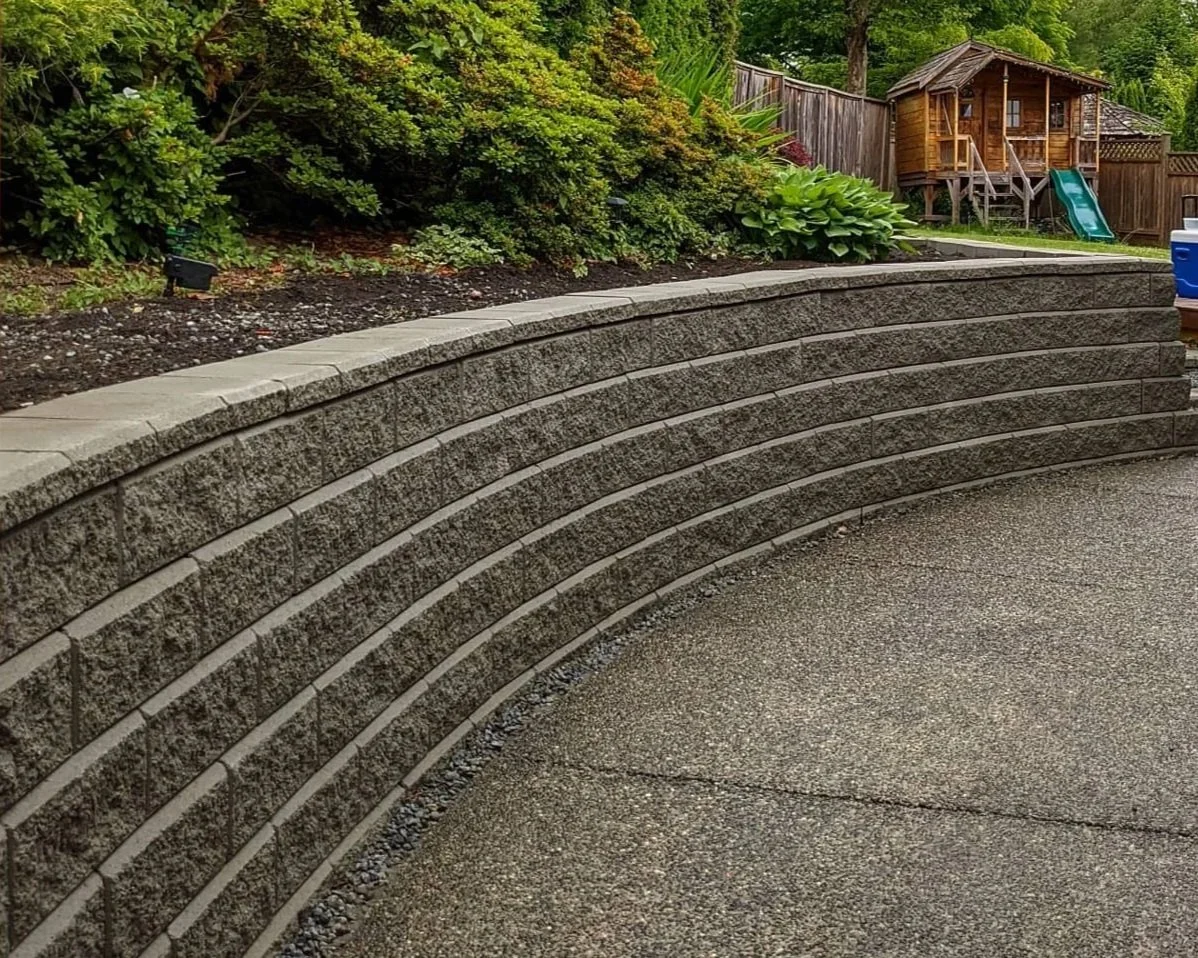
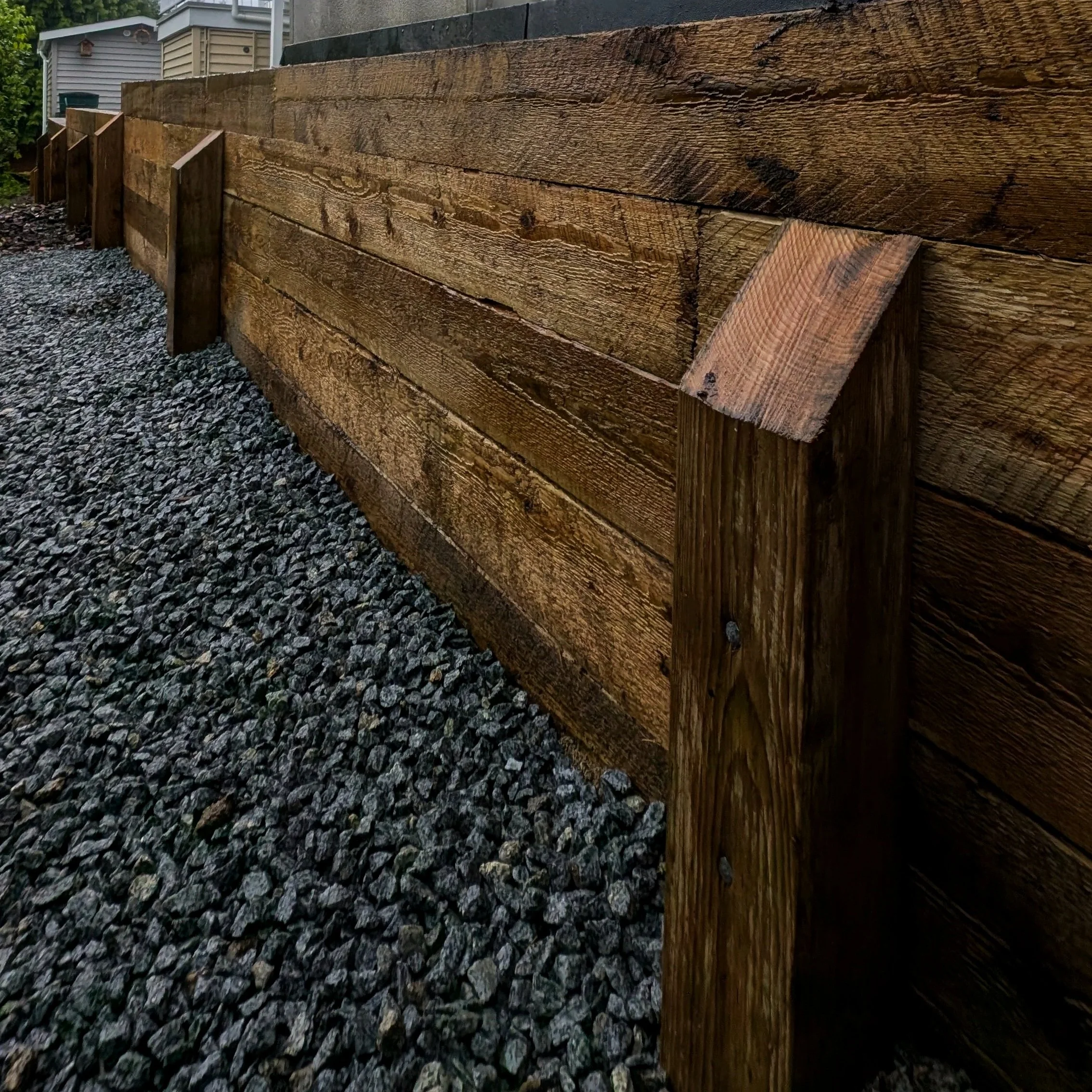
Material choice. Pressure-treated timber is the most budget-friendly option and works well for shorter garden walls, but it has a shorter lifespan in our climate — typically 15–20 years before rot and moisture take their toll. Segmental concrete block systems cost more upfront but are engineered for freeze-thaw cycles and last 40–50+ years with proper installation. Natural stone sits at the premium end, both in appearance and price.

Soil and site conditions. The Tri-Cities and surrounding areas have a mix of sandy and heavy clay soils, and clay in particular holds water and pushes harder against a wall over time. Poor soil conditions often mean more excavation, more base preparation, and more drainage material — all of which show up in the final price.

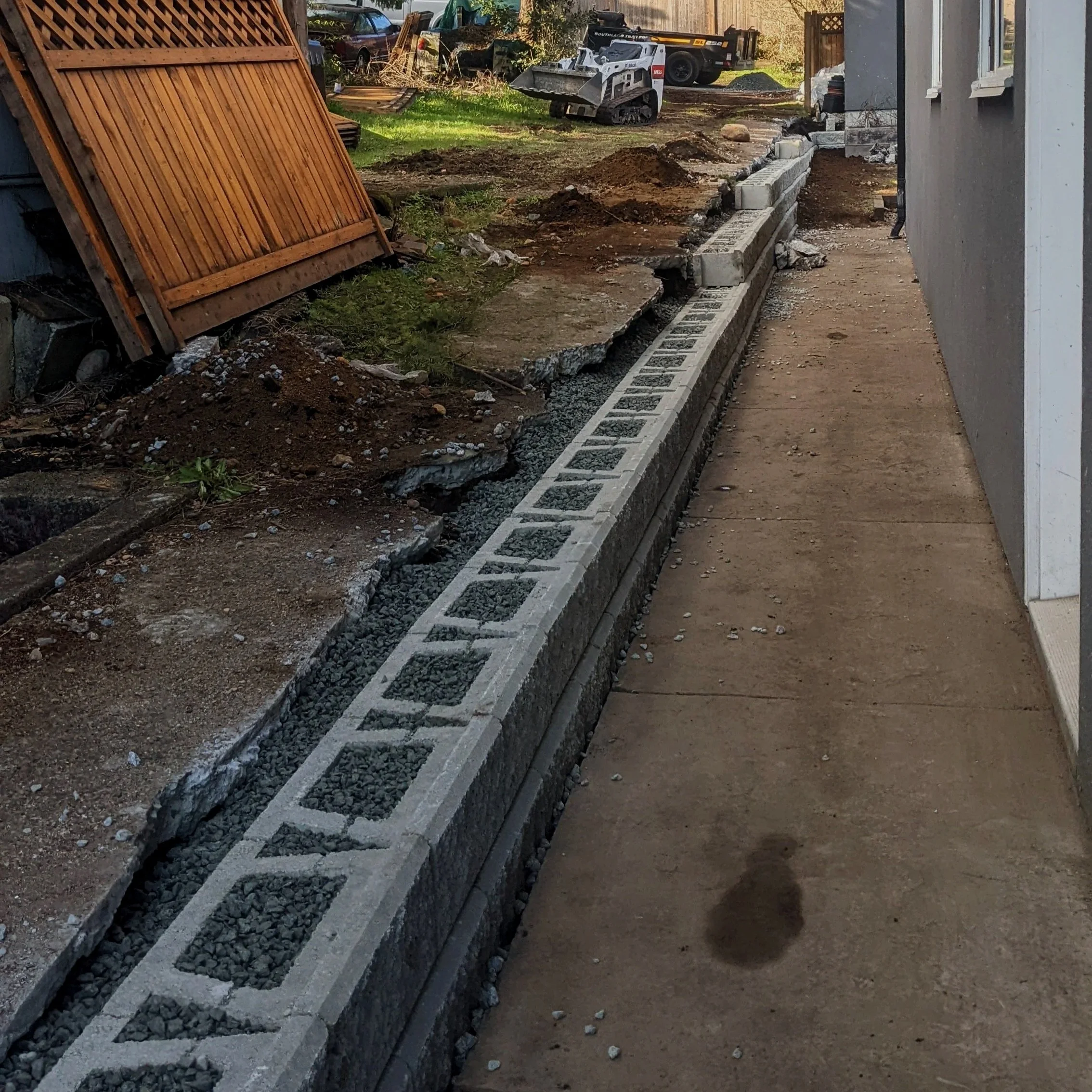
Drainage. This is the one homeowners underestimate most, and it's arguably the most important line item on any retaining wall quote. Every properly built wall needs a perforated drain pipe at the base, clean gravel backfill, and often filter fabric to keep soil from clogging the drainage layer over time. Skipping or skimping on drainage is the single most common reason retaining walls fail — and failure here doesn't mean a small crack, it can mean the wall leaning, bulging, or collapsing outright.

Access and site prep. If equipment can get close to the work area, labour costs stay lower. Narrow side yards, fences that need to come down first, or limited truck access can all add cost.

Typical Price Ranges

To give you a rough sense of what to expect locally:

  • Timber retaining walls: generally the most economical option for shorter walls (under 3 ft), though exact pricing varies significantly based on height and site conditions.

  • Segmental concrete block walls: a common mid-range choice for the Lower Mainland, with pricing that climbs noticeably as height increases, largely due to added reinforcement and drainage requirements.

  • Natural stone walls: the highest-cost option, reflecting both material cost and the skilled labour required for a proper stone build.

These categories can vary by a wide margin depending on your specific site — which is exactly why a real, on-site quote matters more than a generic price-per-foot number pulled from the internet. Two walls that look similar from the sidewalk can have very different costs once soil conditions, drainage needs, and access are factored in.

Do You Need a Permit?

In most Tri-Cities municipalities, retaining walls over roughly 1 metre (about 3–4 feet) require a permit, and taller walls may need engineered drawings. Requirements vary by city, so it's worth confirming with your specific municipality — or asking your contractor to handle that step for you as part of the project.

Why Drainage Matters More Than the Wall Itself

We'll say this as plainly as we can: a retaining wall without proper drainage is a wall that's going to fail. Water buildup behind a wall creates hydrostatic pressure that no amount of good-looking block or stone can resist forever. This is exactly why our approach to every retaining wall — regardless of material or budget — starts with drainage: perforated pipe, compacted base, and proper backfill, every time.

A wall that costs a bit less upfront but skips proper drainage isn't actually cheaper — it's a wall you'll likely be paying to rebuild in a few years, on top of whatever it cost the first time.

Getting an Accurate Quote

Because so much depends on your specific yard — soil type, slope, access, and how tall the wall needs to be — the best next step is a free, on-site quote rather than trying to estimate from a general price range. We'll walk your property, talk through what you're trying to solve (erosion, a flat usable space, a sloped lot that needs terracing), and give you a clear, itemized quote with no surprises.

Serving the Tri-Cities (Coquitlam, Port Coquitlam, Port Moody, Anmore, and Belcarra), Burnaby, New Westminster, and Vancouver.

[Request a Free Retaining Wall Quote →]

Frequently Asked Questions

How long does a retaining wall last? Timber walls typically last 15–20 years, while properly built concrete block or natural stone walls can last 40–50+ years with correct drainage and installation.

Can I build a retaining wall myself? Small garden walls under a couple feet are sometimes DIY-friendly, but anything higher — or anything holding back a slope near a structure, driveway, or property line — should be professionally built. Improper drainage or base prep is the most common cause of wall failure, and a failed wall is far more expensive to fix than to build correctly the first time.

What's the difference between a retaining wall and a garden wall? A retaining wall is structural — it's engineered to hold back soil and resist pressure. A garden wall or edging is decorative and isn't designed to bear significant load. If your yard has any real slope or grade change, you likely need a true retaining wall, not just an edging border.Here

Read More